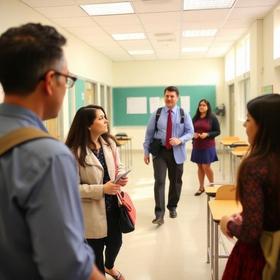

A private school website can tell you about class size, advanced courses, athletics, arts programs, and college outcomes. It can show smiling students gathered around laboratory tables, performing onstage, or talking beneath autumn trees. What it cannot easily tell you is whether your child will walk into school on an ordinary Tuesday and feel that they belong.
For many families, "Will my child find their people?" is ultimately a question about private school culture. Will some classmates share their interests? Adults who notice when something is wrong? Room for a quiet child, a highly driven student, an unconventional thinker, or someone still figuring out who they are?
Those questions deserve as much attention as academics. The challenge is learning how to evaluate the culture students actually experience rather than the culture presented in admissions materials.
Why Belonging Deserves a Place on Your School Checklist
Belonging is not simply about whether a child makes friends quickly. It reflects whether students believe that people within the school know them, value them, and care about their learning.
The Centers for Disease Control and Prevention describes school connectedness as the feeling that adults and peers at school care about students as individuals and about their learning. Its November 2024 guidance notes that students who feel connected to school are more likely to have stronger attendance and academic outcomes and are less likely to experience several health and behavioral risks.
That makes culture more than an admissions-era question about whether